
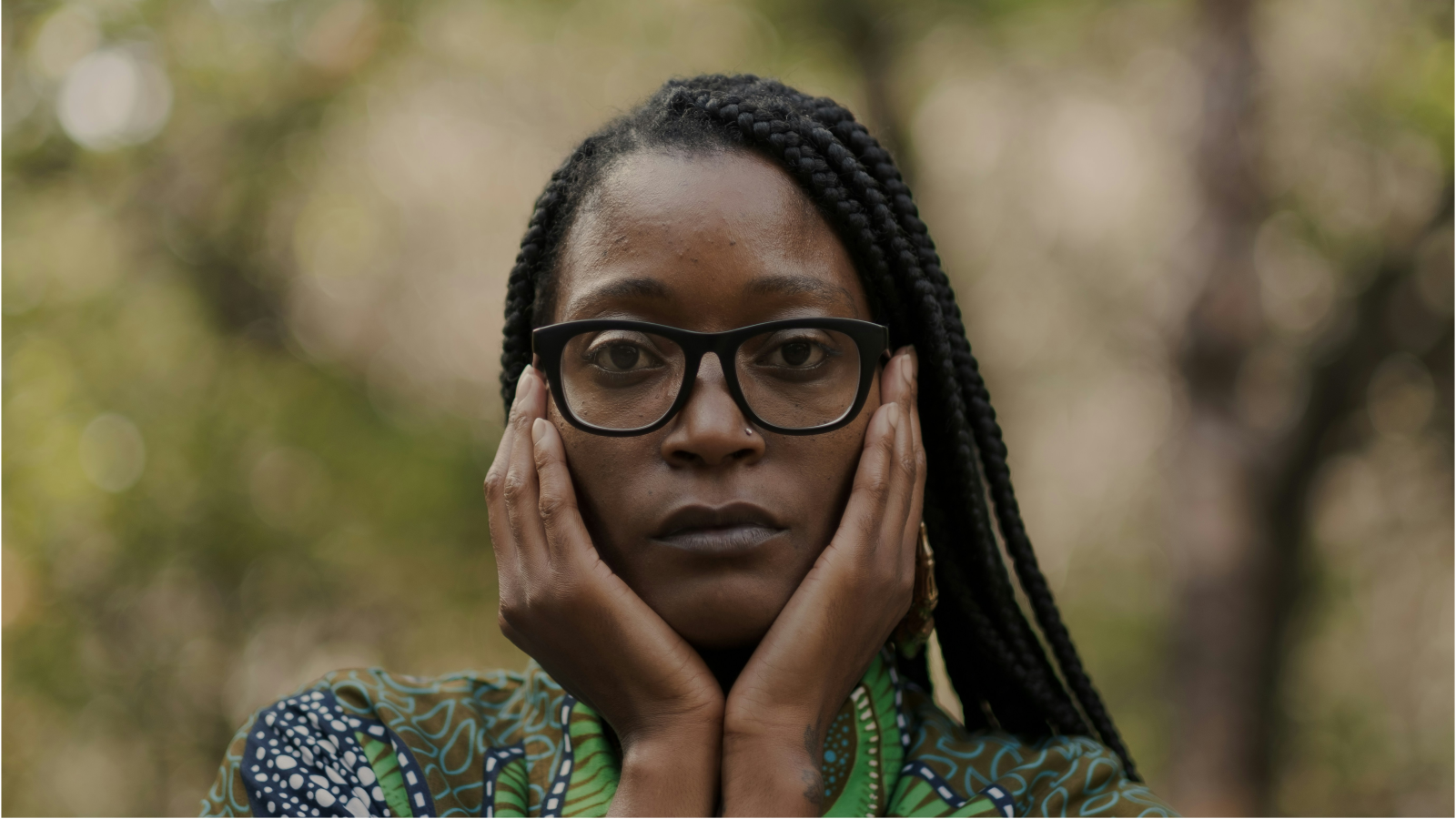
On Wednesday I Was Fine. By Thursday I Was Questioning if I Wanted to Live.

Content Team
May 4, 20265 min read
Quick Answer
If your mood suddenly drops before your period—shifting from feeling stable to overwhelmed, depressed, or hopeless—you may be experiencing Premenstrual Dysphoric Disorder (PMDD). PMDD is a hormone-related condition that causes severe emotional and physical symptoms in the days leading up to menstruation. It is not the same as typical premenstrual symptoms and may require medical support.
When the Shift Doesn’t Make Sense
Danielle couldn’t explain it.
On Wednesday, she felt like herself—focused, social, even optimistic. By Thursday afternoon, everything felt heavy. Conversations felt harder. Small inconveniences felt overwhelming. By the evening, she was crying in her bathroom, trying to understand how her mind had turned against her so quickly.
She told herself it was stress. Maybe she didn’t sleep well. Maybe work had just caught up to her.
But then it happened again. And again.
Each time, the pattern felt random—until it didn’t.
Recognizing a Pattern You Were Never Taught to See
For many women, especially Black women navigating high expectations and limited time for self-reflection, emotional changes are often dismissed or normalized.
Danielle started noticing something subtle: the shift always came at the same time each month.
Right before her period.
What once felt unpredictable began to feel cyclical. What felt like a personal failure began to look like a pattern.
PMDD symptoms typically occur during the luteal phase of the menstrual cycle—the 1–2 weeks before menstruation—and improve shortly after the period begins.
This realization didn’t make the experience easier. But it gave it context.
What Is PMDD—and Why It Feels So Intense
Premenstrual Dysphoric Disorder (PMDD) is a severe, hormone-sensitive condition that affects mood, behavior, and physical well-being.
It’s often misunderstood as “bad PMS,” but the impact is significantly more intense.
[Medical Fact: PMDD affects approximately 3–8% of menstruating individuals and is recognized as a depressive disorder in the DSM-5.]
For Danielle, this meant:
- Sudden feelings of hopelessness
- Irritability that strained relationships
- Difficulty concentrating at work
- A sense of losing control over her emotions
And then—just as quickly—it would pass.
Why Hormones Can Affect Mental Health This Way
PMDD isn’t caused by “too many” hormones. Instead, it’s linked to how the brain responds to normal hormonal changes.
PMDD is associated with an abnormal sensitivity to fluctuations in estrogen and progesterone, which can affect neurotransmitters like serotonin.
This means your body may be going through a typical cycle—but your brain is reacting differently.
That difference can feel overwhelming, confusing, and deeply isolating.
The Emotional Toll of Not Knowing
Before Danielle understood what might be happening, she blamed herself.
She wondered if she was “too sensitive.”
>She questioned her stability.
>She tried to push through it quietly.
This is a common experience.
PMDD is frequently underdiagnosed, and individuals may go years without recognition or treatment.
Without language or awareness, many people internalize the symptoms instead of recognizing them as part of a medical condition.
And for Black women—who are often expected to be resilient no matter what—that silence can be even heavier.
How PMDD Shows Up Beyond Mood
While emotional symptoms are often the most noticeable, PMDD can also affect the body and daily functioning.
You might notice:
- Fatigue or low energy
- Changes in sleep patterns
- Appetite shifts or cravings
- Physical symptoms like bloating or breast tenderness
- Feeling disconnected from yourself or others
PMDD diagnosis requires tracking symptoms across at least two menstrual cycles to confirm timing and severity.
This is why tracking patterns—not just isolated moments—is key.
Key Takeaways
- Sudden, severe mood changes before your period may be more than typical premenstrual symptoms
- PMDD is a recognized medical condition linked to hormone sensitivity, not personal weakness
- Patterns across your cycle matter more than individual emotional episodes
- Many people experience delayed diagnosis, especially when symptoms are normalized or dismissed
- Understanding what’s happening is the first step toward feeling more in control
What to Do Next
If Danielle’s story feels familiar, here are a few grounded next steps:
- Start tracking your symptoms
Notice emotional, physical, and behavioral changes across your cycle. - Look for timing patterns
Pay attention to when symptoms begin, peak, and improve. - Reduce self-blame
Your experience is valid—even if you don’t fully understand it yet. - Explore support options
This may include therapy, lifestyle adjustments, or medical care depending on your needs. - Stay connected to trusted resources
Education and community can help you feel less alone as you navigate next steps.
Questions to Ask Your Provider
- Could my symptoms be related to PMDD or another hormonal condition?
- How can I track my symptoms in a way that supports diagnosis?
- What treatment options are available for PMDD?
- How do hormonal changes affect mental health in my case?
- Are there lifestyle or mental health supports I should consider alongside medical care?
Medical Disclaimer
This article is for educational purposes only and does not replace medical advice, diagnosis, or treatment. Always consult a qualified healthcare provider with questions about your health. Find a provider on Health in Her HUE
Part of a 4-part mini-series exploring hormonal health, mental health, and the patterns many women are taught to overlook—until they start paying attention.
Explore the full series below:
- I Thought I Was Losing My Mind—Until I Checked My Cycle
A lived experience of recognizing patterns between mood changes and the menstrual cycle. - Why We Dismiss Women’s Pain as “Just Hormones”
A closer look at the cultural and medical bias that leads many women to question their own symptoms. - PMDD vs. PMS: What’s Actually Happening in Your Body
A clear, science-backed breakdown of the differences between PMS and PMDD.
Author
Content Team